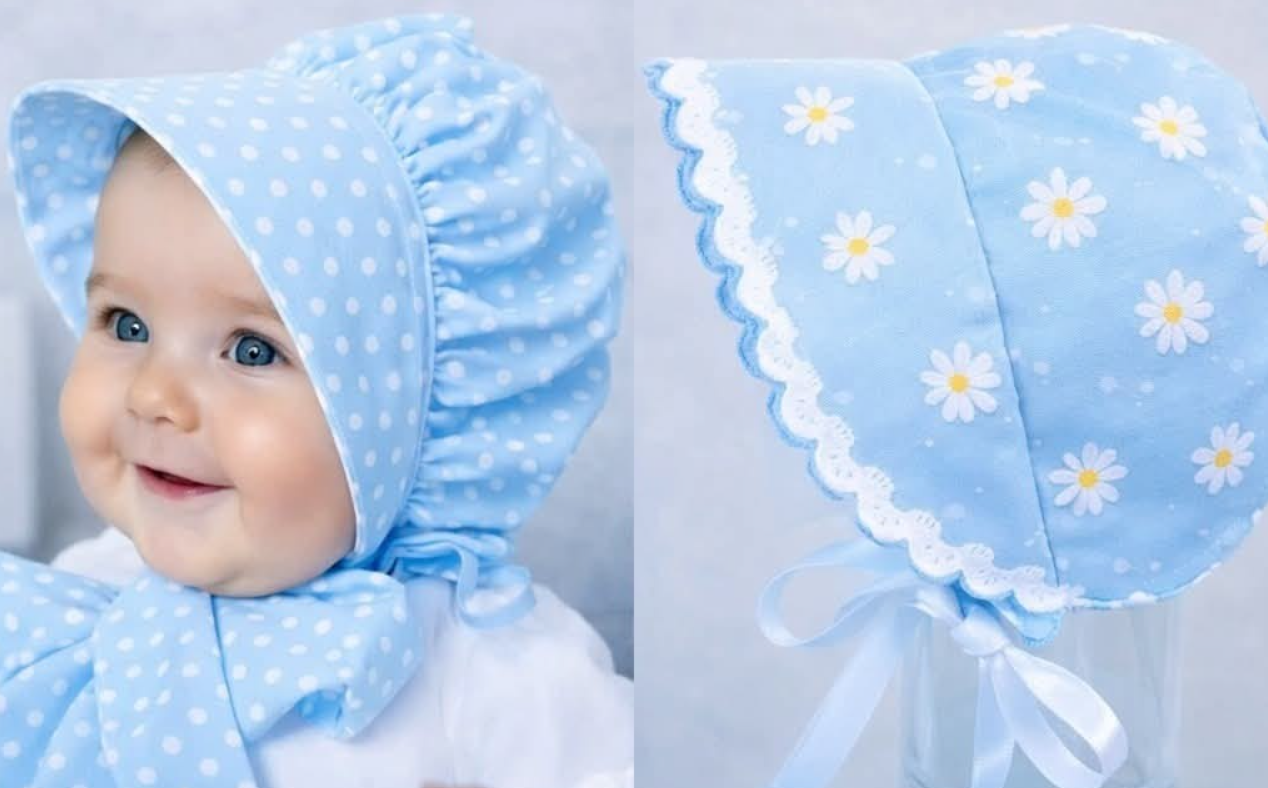
Creating a bonnet allows you to:
- Choose soft, baby-friendly fabrics
- Coordinate colors with existing outfits
- Create personalized gifts
- Use cherished fabric scraps
- Add heirloom-quality details
- Develop and refine sewing skills
The finished bonnet is not only practical but also becomes a treasured keepsake that families can save for years.
Choosing the Perfect Fabric
Fabric selection plays a major role in the comfort and appearance of your baby bonnet.
Cotton
Cotton remains one of the most popular choices because it is breathable, soft, and easy to sew. Lightweight quilting cottons work especially well for everyday bonnets.
Linen
Linen offers a beautiful natural texture and a classic heirloom appearance. It is lightweight and becomes softer with every wash.
Cotton Lawn
For a more delicate finish, cotton lawn provides a smooth texture and elegant drape while remaining gentle on sensitive skin.
Double Gauze
Double gauze fabrics are exceptionally soft and comfortable for babies, making them ideal for everyday wear.
Seasonal Considerations
- Spring: Floral cotton prints
- Summer: Lightweight cotton or linen
- Autumn: Rich earth tones and textured fabrics
- Winter: Soft flannel-lined versions for added warmth
Popular Color Combinations
One of the joys of sewing baby bonnets is selecting beautiful color palettes.
Some timeless combinations include:
Classic White
A white bonnet evokes traditional elegance and works beautifully for christenings, family portraits, and special occasions.
Soft Pastels
Pink, blue, mint, lavender, and butter yellow remain perennial favorites for baby accessories.
Floral Prints
Tiny floral prints create a vintage-inspired look that feels charming and feminine.
Neutral Tones
Cream, beige, sage green, and soft gray offer a modern, gender-neutral aesthetic.
Heirloom Style
Combining white fabric with lace trim and delicate embroidery creates a timeless keepsake piece.
Essential Sewing Supplies
Before beginning your bonnet project, gather your materials:
- Fabric according to pattern requirements
- Matching thread
- Fabric scissors or rotary cutter
- Sewing machine
- Pins or clips
- Iron and ironing board
- Measuring tools
- Optional lace or trim
- Optional embroidery supplies
Having everything prepared before you begin makes the sewing process smoother and more enjoyable.
Tips for Sewing a Professional-Looking Bonnet
Prewash Fabric
Always prewash and press your fabric before cutting. This helps prevent future shrinkage and ensures accurate measurements.
Use Sharp Tools
Sharp scissors and fresh sewing machine needles make a significant difference in stitch quality and fabric handling.
Press Frequently
Professional-looking projects often come down to pressing. Press seams carefully as you sew for crisp, polished results.
Sew Slowly Around Curves
Bonnet patterns often include curved sections. Sewing slowly and accurately will help create smooth, attractive lines.
Clip Curved Seams
Carefully clipping seam allowances allows curved areas to lie flat after turning.
Customization Ideas
One of the best aspects of making your own baby bonnet is the opportunity to personalize it.
Consider adding:
Lace Trim
A delicate lace edge instantly creates a vintage heirloom appearance.
Embroidery
Personalized initials, names, flowers, or small motifs make the bonnet unique.
Decorative Bows
Fabric ties can be embellished with bows for an extra charming touch.
Contrasting Linings
Using a coordinating fabric inside the bonnet adds an unexpected designer detail.
Matching Sets
Create coordinating accessories such as:
- Baby bibs
- Bloomers
- Dresses
- Quilts
- Burp cloths
- Headbands
Matching sets make wonderful baby shower gifts.
A Perfect Handmade Gift
Few gifts are as meaningful as something handmade for a new baby. A bonnet sewn with care demonstrates thoughtfulness and love that cannot be purchased in a store.
New parents often appreciate handmade items because they feel personal and unique. A beautifully sewn bonnet can become part of newborn photos, milestone pictures, and cherished family memories.
Many sewists enjoy creating multiple bonnets in different fabrics so babies have options for everyday wear and special occasions.
Building Sewing Skills with Small Projects
The Baby Bonnet Sewing Pattern is also an excellent project for developing sewing techniques.
It provides opportunities to practice:
- Accurate cutting
- Curved seams
- Edge finishing
- Topstitching
- Pressing techniques
- Decorative embellishments
Because the project is relatively small, it can usually be completed in a short amount of time while still offering valuable sewing experience.
Caring for Your Finished Bonnet
Proper care will help your handmade bonnet remain beautiful for years.
Recommended care tips:
- Wash in cool or warm water
- Use mild detergent
- Avoid harsh bleach
- Reshape while damp
- Iron on appropriate fabric settings
- Store flat when not in use
These simple practices help preserve both the fabric and any decorative details.
Creating Family Heirlooms
Many families treasure handmade baby garments long after children have outgrown them. A carefully sewn bonnet can become part of a family’s history, passed down from one generation to the next.
Imagine a bonnet worn by siblings, cousins, and future generations. These meaningful handmade items often become some of the most cherished keepsakes in a family collection.
That is part of what makes sewing projects like this so rewarding—they combine creativity, practicality, and sentiment in a single beautiful piece.
Free PDF Pattern
To help you get started, you can find the complete Baby Bonnet Sewing Pattern PDF below. Download the free pattern, gather your favorite fabrics, and enjoy creating a beautiful handmade bonnet for a special little one.
Baby Bonnet Sewing Pattern PDF
The Baby Bonnet Sewing Pattern is a delightful project that combines timeless style with practical functionality. Whether you’re an experienced sewist or just beginning your sewing journey, creating a handmade bonnet offers a rewarding experience and a beautiful finished result.
With thoughtful fabric choices, careful construction, and your own creative touches, you can create a bonnet that will be treasured for years. From baby showers to family photographs and everyday wear, this charming accessory remains one of the most beloved handmade gifts for little ones.