If you are a beginner, consider starting with a straightforward silhouette. Patterns with fewer pieces and minimal closures are often easier to assemble and can help you become comfortable with basic garment construction before moving on to more complicated designs.
More experienced sewists may enjoy experimenting with fitted dresses, structured bodices, detailed sleeves, or dresses that require more advanced finishing techniques.
Understanding Sewing Pattern Sizes
One important thing to remember is that sewing pattern sizes may be different from ready-to-wear clothing sizes. Instead of choosing your pattern size based only on the size you normally purchase in stores, take accurate body measurements and compare them with the measurement chart included with the pattern.
Common measurements include:
- Bust
- Waist
- Hips
- Back waist length
- Shoulder width
- Finished garment length
Depending on the style of the dress, some measurements will be more important than others. It is also helpful to check the finished garment measurements whenever they are provided. These measurements can give you a better idea of how much ease the dress will have and whether the finished fit will be loose, semi-fitted, or close to the body.
Fabric selection can completely transform a dress pattern. The same pattern made from two different fabrics may produce surprisingly different results. A lightweight fabric might create a soft and flowing silhouette, while a fabric with more structure can emphasize the shape of the garment.
Depending on the recommendations included with your pattern, possible fabric choices may include cotton, linen, rayon, viscose, chambray, poplin, crepe, lightweight denim, or knit fabrics. Always check whether the pattern was designed for woven or stretch fabrics before purchasing your material. A pattern designed for knit fabric may depend on stretch for proper fit, while a pattern intended for woven fabric may require closures such as buttons or a zipper.
Preparing Your Fabric
Preparation is one of the most important parts of successful garment sewing. Many fabrics should be washed and dried before cutting because they may shrink during their first wash. Prewashing helps prevent your carefully sewn dress from unexpectedly changing size afterward.
Once your fabric has been prepared, press it thoroughly before placing your pattern pieces. Smooth fabric makes accurate cutting much easier.
One of the most common sewing mistakes is rushing directly to the cutting stage. First, read through the entire pattern. Identify the pattern pieces you need for your chosen dress variation and size. Pay attention to markings such as:
- Grainlines
- Notches
- Darts
- Fold lines
- Button placement
- Pocket placement
- Gathering marks
- Zipper markings
These symbols provide important information during construction. When laying out the pieces, carefully follow the grainline indicated on each pattern piece. Correct grain placement helps the finished garment hang properly.
Make a Test Garment When Possible
If you are working with expensive or special fabric, consider making a muslin or toile first. A test version allows you to evaluate the fit before cutting into your final fabric.
You can check areas such as the bust, waist, hips, shoulders, armholes, and overall length. If adjustments are necessary, they can be made to the pattern before you begin your final dress. This extra step requires a little more time, but it can make a significant difference in the finished result.
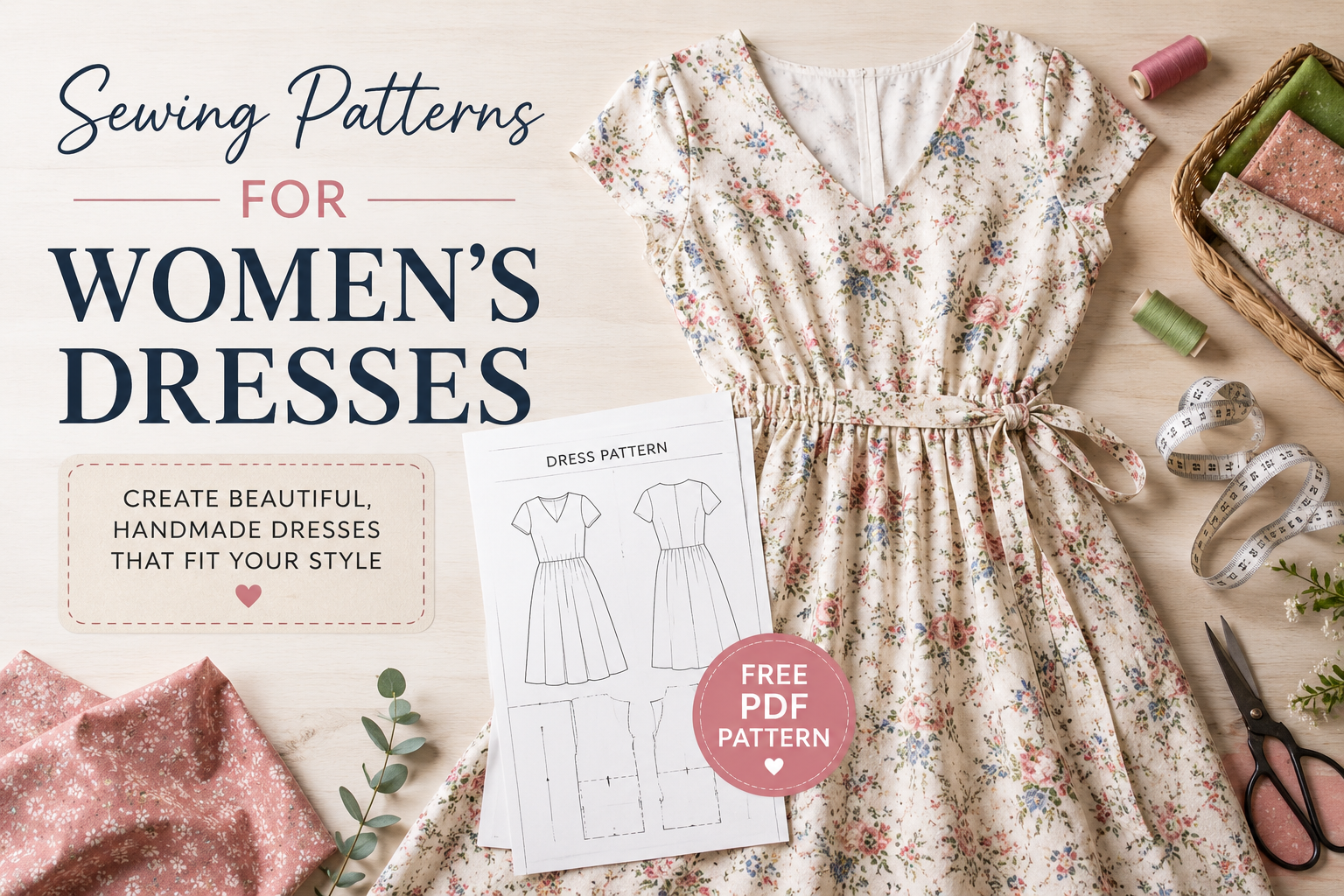
Sewing Patterns for Women’s Dresses
Small finishing details can make a handmade dress look especially polished. Pay attention to seam finishes, hems, neckline edges, facings, and closures. Raw seams may be finished with a serger, zigzag stitch, pinking shears, French seams, or another technique appropriate for your fabric.
Before hemming the dress, it can also be helpful to try it on with the shoes you are most likely to wear. This makes it easier to decide whether the original hem length works for you.
Customize Your Dress
One of my favorite things about sewing from patterns is the opportunity for customization. Once you understand the basic construction, you can begin making the design your own.
You might add pockets, change the sleeve length, create a contrasting waistband, use decorative buttons, combine coordinating fabrics, or adjust the hem. A simple pattern can become completely different depending on the details you choose.
Floral cotton can create a charming everyday dress, while linen may produce a relaxed summer look. A solid fabric can highlight the silhouette and construction details, while a bold print can turn the same pattern into a statement piece. That versatility is part of what makes dress sewing so enjoyable.
Tips for Better Dressmaking Results
For a smoother sewing experience, keep these simple tips in mind:
- Take accurate body measurements before choosing your size.
- Read the entire pattern before cutting your fabric.
- Prewash fabric when appropriate.
- Transfer all important pattern markings carefully.
- Use a fresh sewing machine needle suitable for your fabric.
- Test your stitch length and tension on a fabric scrap.
- Press seams as you sew.
- Try the garment on during construction whenever possible.
- Make fitting adjustments before finishing seams and hems.
- Take your time—accuracy is usually more important than speed.
These small habits can make garment sewing much easier and help produce a cleaner finished dress.
Sewing Dresses Is a Skill Worth Learning
Making your first dress can feel ambitious, especially when you unfold a pattern and see several pieces, markings, and instructions. But dressmaking becomes much easier when you approach it one step at a time.
Each project teaches you something new. You may learn how to sew a dart, install a zipper, create gathers, attach a facing, set in a sleeve, or achieve a more accurate fit. Over time, those individual skills begin to come together. And few things compare to the satisfaction of wearing a dress and being able to say, “I made it myself.”
Free Sewing Patterns for Women’s Dresses – PDF
Ready to start sewing? Below, you’ll find the free PDF with Sewing Patterns for Women’s Dresses. Download the pattern, review the instructions and size information, choose a beautiful fabric, and begin creating your next handmade garment.
Remember to check the printing instructions before assembling your PDF pattern. If the pattern includes a test square, measure it before cutting your pieces to make sure the pages were printed at the correct scale.
PDF sewing patterns
Sewing patterns for women’s dresses open the door to an incredible variety of handmade wardrobe possibilities. From comfortable everyday dresses to elegant pieces for special occasions, a good sewing pattern provides the foundation while allowing plenty of room for creativity.
Choose fabrics you love, take accurate measurements, work carefully through each construction step, and don’t be afraid to personalize the design. Every dress you make is another opportunity to improve your sewing skills and create something that is uniquely yours.
I hope the free PDF sewing patterns provided below inspire your next project. Pick your favorite design, prepare your sewing machine, and enjoy turning beautiful fabric into a dress you’ll be proud to wear.