- Accurate garment fitting
- Sewing darts
- Creating gathers or pleats
- Constructing waistbands
- Installing closures
- Matching seams and pattern markings
- Finishing curved edges
- Hemming
- Working with interfacing
- Finishing seam allowances
You don’t necessarily need to be an expert in all of these techniques before beginning. Take your time, read each construction step carefully, and test unfamiliar techniques on scrap fabric when necessary.
For skirt patterns, the two measurements that are usually especially important are the waist and hips. Do not automatically choose the same numerical size you normally purchase in ready-to-wear clothing. Sewing pattern sizing can differ significantly from store-bought clothing sizes.
Compare your measurements with the sizing chart provided with the pattern. If your waist and hip measurements correspond to different sizes, you may need to blend gradually between sizes. This can provide a more comfortable and flattering fit than simply choosing one size for the entire garment.
Whenever available, also examine the finished garment measurements. These measurements can help you understand how much ease is built into the design and how the finished skirt is intended to fit.
Choosing Fabric for Your Skirt
Fabric selection plays an important role in determining the final appearance of your skirt. Some designs look beautiful in fabrics with a little structure, while fuller or gathered styles may benefit from lighter materials with more movement. Depending on the recommendations included with your specific pattern, suitable fabrics may include:
- Cotton
- Linen
- Chambray
- Poplin
- Twill
- Lightweight denim
- Rayon
- Viscose
- Crepe
- Corduroy
- Other light- to medium-weight woven fabrics
Always check the fabric recommendations included with the PDF before purchasing your material. If you are making a skirt with pleats or gathers, think carefully about fabric weight. Heavy fabric can create additional bulk around the waist, while lightweight fabric may produce softer fullness.
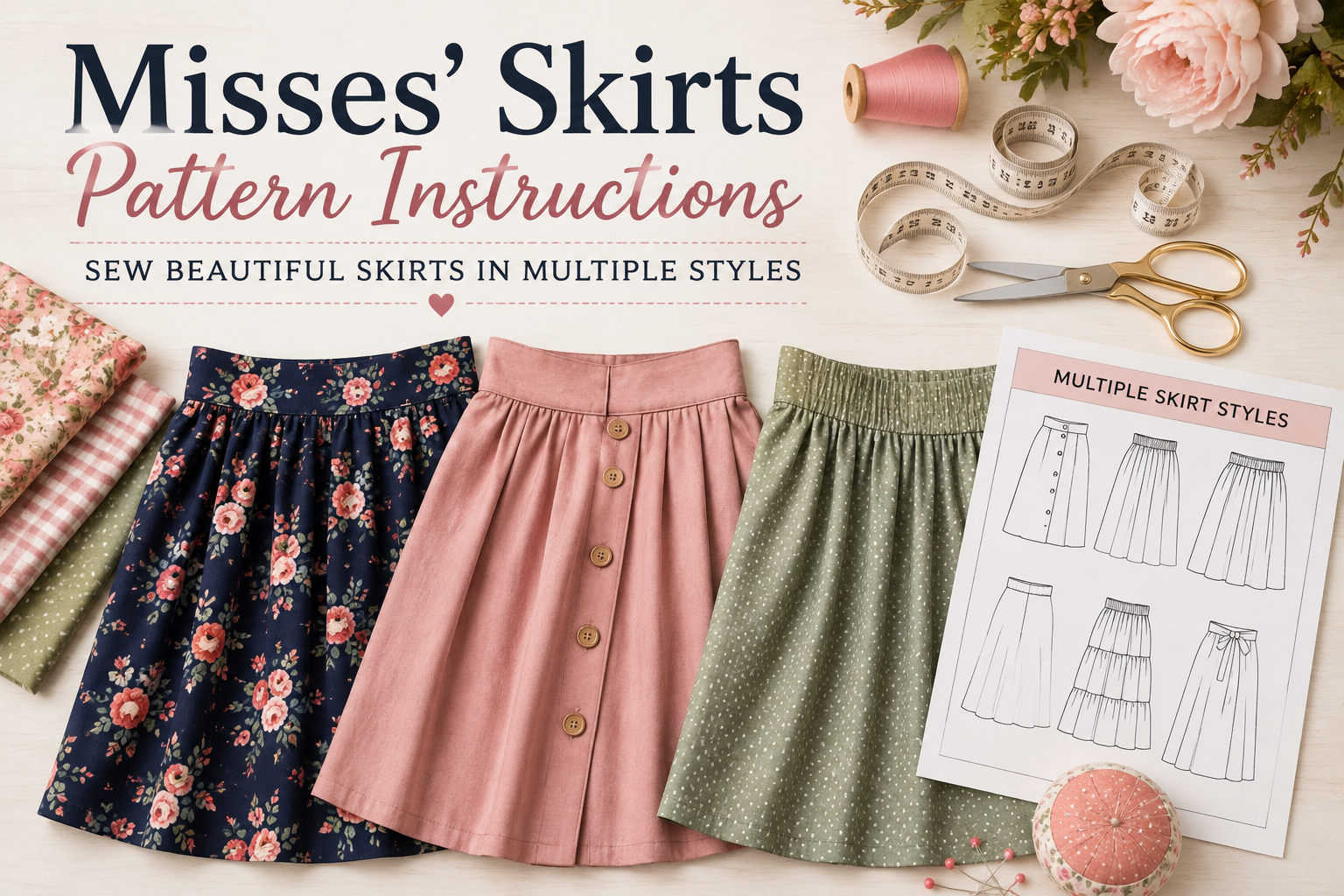
Misses’ Skirts Pattern Instructions
Accuracy makes a significant difference when sewing clothing. Measure yourself before selecting your pattern size and carefully transfer every important marking from the pattern to your fabric.
Use the correct needle for your fabric and test your machine settings on a scrap before sewing the actual garment. Most importantly, don’t rush. Taking a few extra minutes to pin a seam accurately, press a waistband, or check the fit can save much more time later.
Why Sew Your Own Skirts?
One of the best things about sewing your own wardrobe is having creative control over the finished garment. You can choose exactly the fabric you want, experiment with different lengths, adjust the fit, and add details that make your skirt unique.
A versatile multi-style pattern is particularly useful because it allows you to explore different looks while building on many of the same fundamental sewing skills. As you complete each version, you’ll become more comfortable with garment construction and may discover new favorite sewing techniques along the way.
Free Misses’ Skirts Pattern PDF
Ready to begin your next sewing project? At the end of this post, you can access the free Misses’ Skirts Pattern PDF, featuring multiple skirt styles to explore.
Before starting, review the pattern instructions, sizing chart, fabric recommendations, required notions, and printing information included in the PDF. Choose your favorite variation, prepare your fabric, and enjoy creating a skirt made especially by you.
Misses’ Skirts Pattern PDF
Learning to sew skirts is an excellent way to strengthen your garment-sewing skills while creating practical pieces that can become part of your everyday wardrobe. With multiple styles available, this Misses’ Skirts Pattern gives you the opportunity to experiment with different silhouettes, fabrics, construction techniques, and finishing details.
Take accurate measurements, prepare your fabric carefully, follow the pattern markings, and press throughout the construction process. Most importantly, enjoy the creative experience of turning fabric and a sewing pattern into a garment you made yourself.