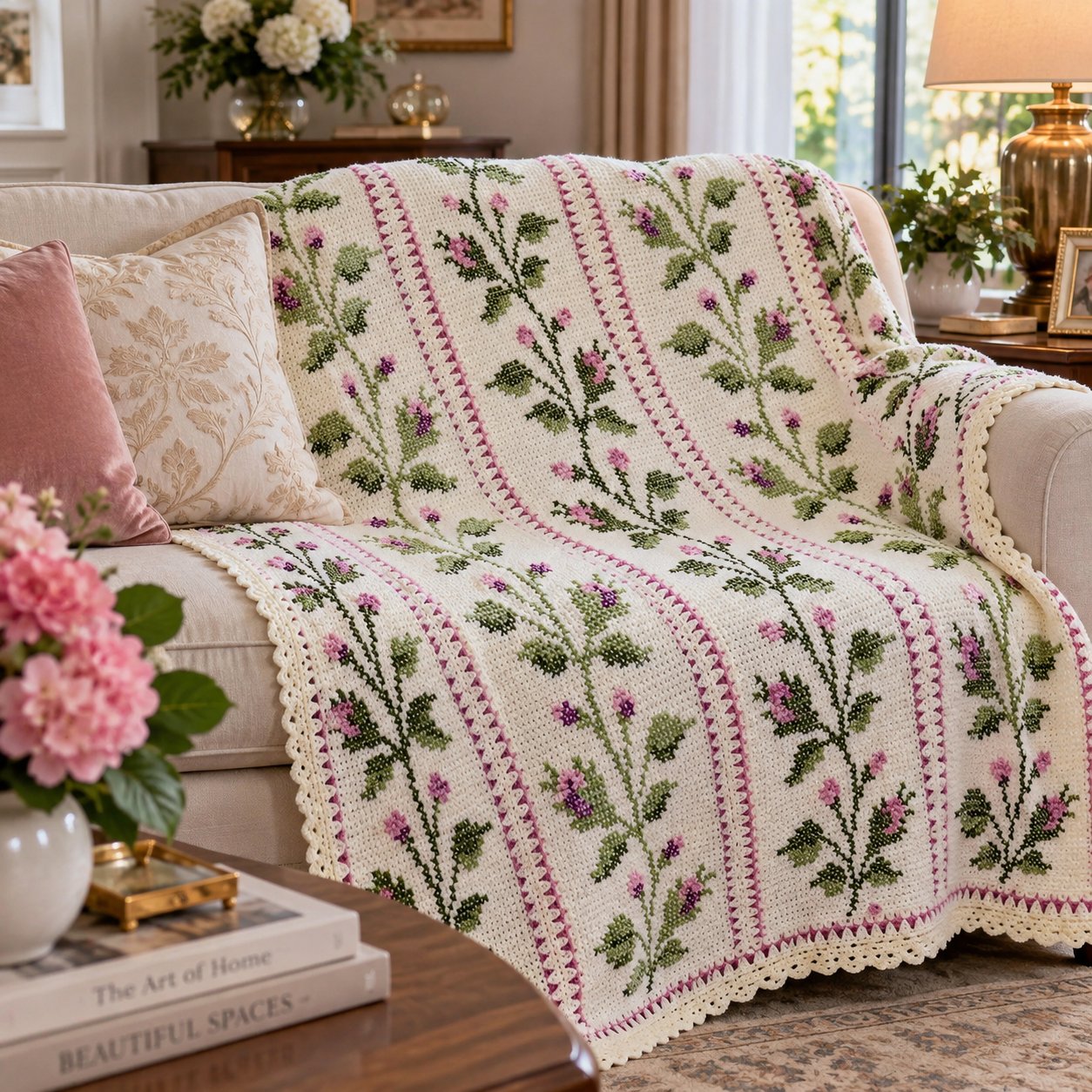
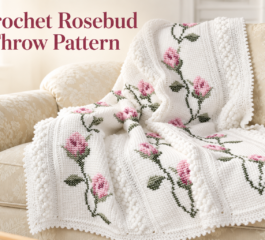
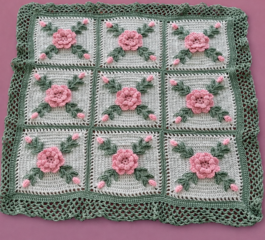
A final border is crocheted around the entire afghan, creating a polished finish and beautifully framing the floral design.
Finished Size
The completed Summer Rose Afghan measures approximately:
48 × 61 inches (122 × 155 cm)
This is a comfortable size for displaying over a sofa, adding an elegant layer to a bed, or using as a cozy decorative throw.
Materials
The original design uses an antique white background combined with several shades of pink and green. You will need:
- Antique White yarn for the Tunisian crochet panels
- Blush Heather yarn
- Dark Rose Heather yarn
- Rose Heather yarn
- Dusty Green yarn
- Olive yarn
- Size J (6 mm) afghan or Tunisian crochet hook
- Size H (5 mm) crochet hook
- Large-eyed blunt yarn needle
The suggested yarns include Lion Brand Pound of Love, Wool-Ease, and Vanna’s Choice. If these yarns are unavailable, choose substitutes with similar weights and textures. Always make a gauge swatch before beginning.
Gauge
When working in Tunisian stitch:
17 stitches and 15 rows = 4 inches (10 cm)
Checking the gauge is particularly important for this project. The floral charts must align correctly with the stitches and rows of each panel, so a major difference in gauge could affect both the finished dimensions and the placement of the embroidery.
Construction of the Afghan Panels
Four identical foundation panels are crocheted in Antique White. Each panel begins with a foundation chain of 38 stitches and is worked in Tunisian stitch for 203 rows.
The long, narrow shape makes the panels easier to manage than one large piece of Tunisian crochet. It also creates natural divisions within the finished afghan, adding structure to the overall design.
Because Tunisian crochet can curl, take care to maintain relaxed and even tension. Blocking the panels before adding the embroidery can help straighten the edges and make the charted designs easier to follow.
Creating the Rose Design
The floral motifs are worked with cross-stitches over the completed Tunisian crochet fabric. The vertical bars of Tunisian stitch form a convenient grid, allowing each colored square on the charts to correspond with a specific stitch.
Chart A is used on two panels, while Chart B is used on the remaining two. Each chart is divided into upper and lower sections so the details remain large enough to read.
Use the color key to distinguish between the pink and green shades. Count carefully from the panel edges and remember to include the row-end stitch when determining where each section of the design begins.
A large-eyed blunt needle is recommended for the embroidery. Avoid pulling the yarn too tightly, as this may distort the panel. The cross-stitches should rest smoothly on the surface while maintaining the natural flexibility of the crocheted fabric.
Decorative Panel Borders
Before the panels are joined, a three-round border is worked around each one. The border includes chain spaces, single crochet, half double crochet, and double crochet details.
The alternating Antique White and Rose Heather rounds subtly define each panel without distracting from the roses. These borders also provide evenly spaced stitches that make joining the panels much easier.
Work carefully around the corners and along the long sides. Consistent stitch placement will help keep the panels straight and prevent the edges from becoming ruffled or pulled inward.
Assembly and Finishing
Arrange the completed panels in the following order:
Panel A, Panel B, Panel A, Panel B
Using Antique White yarn and the smaller crochet hook, join the panels by matching the stitches along their bordered edges. Check that the tops and bottoms of the floral motifs are facing in the same direction before completing the seams.
After all four panels have been joined, crochet the final border around the entire afghan. The finishing rounds feature delicate chain spaces, picots, double crochet stitches, and puff stitches. These details give the blanket a romantic, vintage-inspired edge.
Finally, fasten off securely and weave in every yarn end. Light blocking will help open the border, straighten the seams, and give the afghan its final shape.
Tips for a Beautiful Result
Organize the embroidery yarn by color before starting the charts. Marking completed rows on a printed copy of the chart can also prevent counting mistakes.
When joining the panels, place the afghan on a large flat surface and confirm the arrangement before sewing or crocheting the seams. This simple check can save considerable time.
If you prefer a different color palette, the roses could be worked in burgundy, lavender, peach, or even soft blue. Keep enough contrast between the flowers, leaves, and background so the charted design remains clearly visible.
Download the Free Summer Rose Afghan Pattern PDF
The Summer Rose Afghan is a memorable project that beautifully blends crochet and embroidery. Its climbing roses, leafy stems, and decorative edging create an heirloom-style blanket that can be enjoyed for many years.
For the complete instructions, materials, special stitches, color charts, assembly diagram, and finishing details, download the free Summer Rose Afghan Pattern PDF below.
Summer Rose Afghan PDF
This pattern also offers plenty of opportunities for personalization. Traditional pink roses create a romantic, garden-inspired look, but the flowers can easily be adapted to match your décor or favorite color palette. Deep burgundy would produce a dramatic vintage effect, while peach, lavender, or soft yellow could give the afghan an entirely different personality.
Because the project combines Tunisian crochet, cross-stitch embroidery, panel construction, and decorative edging, it is also a wonderful way to develop several skills within one design. The finished blanket reflects the time and care invested in every detail, making it a meaningful handmade gift for a wedding, anniversary, housewarming, or other special occasion.